
Potato Flute › Library › A History of the Ocarina: From Ancient Vessel Flutes to Budrio
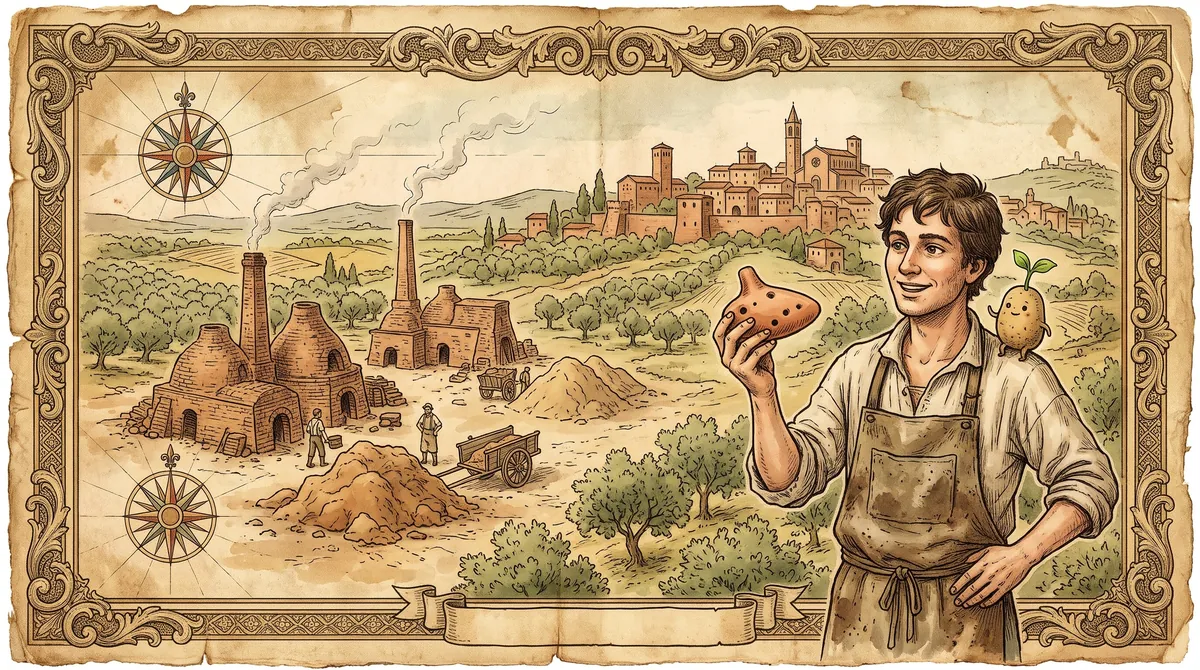
A History of the Ocarina: From Ancient Vessel Flutes to Budrio
Explore the fascinating 12,000-year history of the ocarina: Neolithic flutes like the Runik ocarina, Chinese xun, Mesoamerican clay instruments, and Giuseppe Donati's 1853 invention in Italy.
The ocarina is both one of humanity's newest concert woodwinds and one of our oldest musical companions. The modern ocarina was created in 19th-century Italy, but its family, the vessel flutes, is believed to go back over 12,000 years, in Europe, Asia and the Americas.
Ancient origins: The world's first clay flutes
Unlike open-ended reed pipes or bone whistles, vessel flutes enclose a rounded air pocket. Archaeological excavations have uncovered pottery flutes in early civilizations worldwide:
- The Runik ocarina (Neolithic): Found near Runik in Kosovo, this clay vessel flute from the Neolithic period, thousands of years old, is the earliest musical instrument ever reported in Kosovo.
- The Chinese xun (塤): One of the oldest Chinese instruments, the egg-shaped clay xun is a vessel flute blown across an edge. It was played in court ceremonies and is still played today.
- Mesoamerica: The Maya and Aztec cultures made ceramic vessel flutes shaped like birds, animals and gods. After Hernán Cortés's expedition, Aztec musicians and dancers were brought to Europe, and with them their vessel flutes reached the European courts.
1853 in Budrio: Giuseppe Donati invents the modern ocarina
For centuries in Europe, clay vessel flutes existed primarily as rustic folk noisemakers or children's carnival toys that could only play two or three notes. That changed in 1853 in Budrio, a small town near Bologna, Italy.
A seventeen-year-old brickmaker and musician named Giuseppe Donati reshaped the simple clay vessel into an elongated, transverse shape with 10 tuned finger holes and a mouthpiece spout. He named his creation ocarina, which means "little goose" (ucaréṅna) in the local Bolognese dialect, because its slender silhouette resembled a goose with its head extended.
Donati went on to make ocarinas in graduated sizes, from small, high instruments to large, low ones, so that a group could play in harmony. Budrio's ocarina ensembles grew from this, and the town is still the home of the ocarina today.
1964: John Taylor and the 4-hole English pendant
In 1964, British mathematician and musician John Taylor changed the instrument again. Because the pitch of a vessel flute depends on the total open hole area rather than on where the holes are, he worked out a fingering system in which four holes of carefully chosen sizes can play a full chromatic octave.
This compact system gave birth to the English pendant ocarina: a small, light instrument worn on a cord around the neck, which can play many simple folk tunes and songs.
The ocarina today
The ocarina became famous worldwide through Nintendo's 1998 video game The Legend of Zelda: Ocarina of Time, which introduced millions of young players to the instrument. Today, professional makers in Italy, Japan, Korea, Taiwan, and the Americas make ceramic, wood, plastic and metal ocarinas.



More from the ocarina library
- How to Make a Clay Ocarina: Step-by-Step DIY GuideLearn how to make a real playing clay ocarina from scratch: pinch pot forming, carving the windway and labium cutting edge, tuning toneholes, and firing.
- How to Make an Ocarina from a Real PotatoYes, a real potato can be an ocarina. How to hollow it, carve the windway and sound edge, tune the finger holes, and why it only lasts a day or two.
- Classical Musicians and Composers Who Embraced the OcarinaDiscover the classical repertoire of the ocarina: from the 19th-century Budrio septets to 20th-century avant-garde masterpieces by György Ligeti and Krzysztof Penderecki.
- How an Ocarina Works: The Acoustics of Helmholtz ResonanceUnderstand the physics of the ocarina: why hole position doesn't matter, how chamber volume sets pitch, and why breath pressure controls intonation.
- The Ocarina in Video Games: How a Clay Flute Became MagicWhy the ocarina became gaming's most magical instrument: The Legend of Zelda: Ocarina of Time (1998), Koji Kondo's music, songs that change the world, and how to go from a game controller to a real ocarina.
← Potato Flute home · All articles · Song library